
The Role of Technology in Advancing Modern Farming

Modern farming has undergone a remarkable transformation thanks to technological advancements. These innovations have made agriculture more efficient, sustainable, and productive. Among the most impactful technologies are agriculture drones, which have revolutionized how farmers monitor crops, manage resources, and increase yields. This article explores the role of technology in advancing modern farming, focusing on the benefits and applications of agriculture drones and other cutting-edge tools.
How Agriculture Drones Are Changing Farming Practices
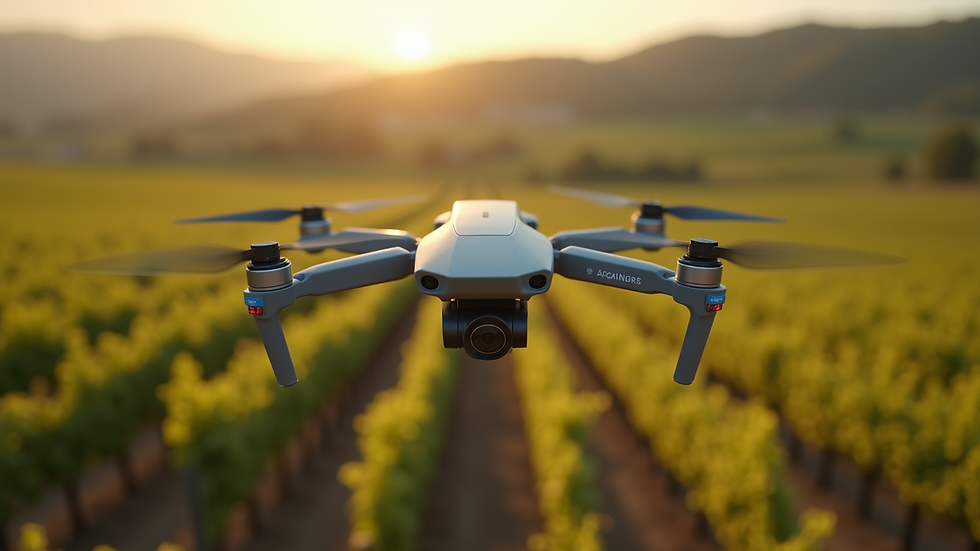
Agriculture drones have become essential tools for farmers worldwide. These unmanned aerial vehicles (UAVs) provide a bird’s-eye view of fields, enabling precise monitoring and management of crops. With high-resolution cameras and sensors, drones can detect issues such as pest infestations, nutrient deficiencies, and irrigation problems early on.
Farmers use drones to:
Survey large areas quickly: Covering acres of farmland in minutes instead of hours.
Collect detailed data: Multispectral and thermal imaging help assess plant health.
Apply treatments precisely: Targeted spraying reduces chemical use and environmental impact.
For example, a farmer noticing uneven crop growth can deploy a drone to identify the exact spots needing attention. This targeted approach saves time and resources while improving crop health.

The Impact of Precision Agriculture Drones on Crop Management
One of the most exciting developments in farming technology is the use of precision agriculture drones. These drones integrate GPS, sensors, and advanced software to provide actionable insights that help farmers make data-driven decisions.
Precision agriculture drones enable:
Variable rate application: Adjusting fertilizer and pesticide amounts based on specific field zones.
Early disease detection: Identifying stressed plants before visible symptoms appear.
Soil health monitoring: Mapping soil moisture and nutrient levels for better irrigation planning.
By using these drones, farmers can optimize input use, reduce waste, and increase yields sustainably. For instance, a vineyard manager can use drone data to apply water only where needed, conserving water and improving grape quality.
The Role of IoT and Smart Sensors in Modern Farming
Beyond drones, the Internet of Things (IoT) and smart sensors play a crucial role in advancing agriculture. These devices collect real-time data on soil conditions, weather, and crop health, allowing farmers to respond quickly to changing conditions.
Key benefits include:
Automated irrigation systems: Sensors detect soil moisture and trigger watering only when necessary.
Climate monitoring: Weather stations provide localized forecasts to plan planting and harvesting.
Livestock tracking: Wearable sensors monitor animal health and behavior.
For example, a smart irrigation system can reduce water usage by up to 30% by watering crops only when sensors detect dry soil. This technology helps conserve resources and lowers operational costs.
Robotics and Automation in Farming Operations
Robotics and automation are transforming labor-intensive farming tasks. Autonomous tractors, robotic harvesters, and planting machines increase efficiency and reduce the need for manual labor.
Advantages include:
Consistent planting and harvesting: Robots work with precision and speed.
Reduced labor costs: Automation handles repetitive tasks.
Improved safety: Machines operate in hazardous conditions without risking human injury.
A robotic harvester can pick fruits at the optimal ripeness, improving product quality and reducing waste. These technologies are especially valuable in regions facing labor shortages.
Data Analytics and AI for Smarter Farming Decisions
The vast amount of data collected by drones, sensors, and machines requires advanced analytics to be useful. Artificial intelligence (AI) and machine learning algorithms analyze this data to provide predictive insights and recommendations.
Farmers benefit from:
Yield prediction models: Forecasting harvest size and quality.
Pest and disease risk alerts: Early warnings based on environmental data.
Resource optimization: Suggestions for fertilizer, water, and pesticide use.
For example, AI can analyze weather patterns and crop data to recommend the best time for planting, maximizing growth potential. This data-driven approach helps farmers make smarter, more profitable decisions.
Embracing Technology for a Sustainable Agricultural Future
The integration of technology in farming is not just about increasing productivity but also about sustainability. Technologies like agriculture drones, IoT sensors, robotics, and AI contribute to reducing environmental impact by optimizing resource use and minimizing waste.
Farmers are encouraged to:
Invest in training: Learn how to use new technologies effectively.
Start small: Pilot projects with drones or sensors before full-scale adoption.
Collaborate with experts: Work with agronomists and tech providers for tailored solutions.
By embracing these innovations, modern farming can meet the growing global food demand while protecting natural resources for future generations.

Technology is reshaping agriculture in profound ways. The use of agriculture drones and other smart tools empowers farmers to work smarter, not harder. As these technologies continue to evolve, they will play an even greater role in ensuring food security and environmental sustainability worldwide.


Comments